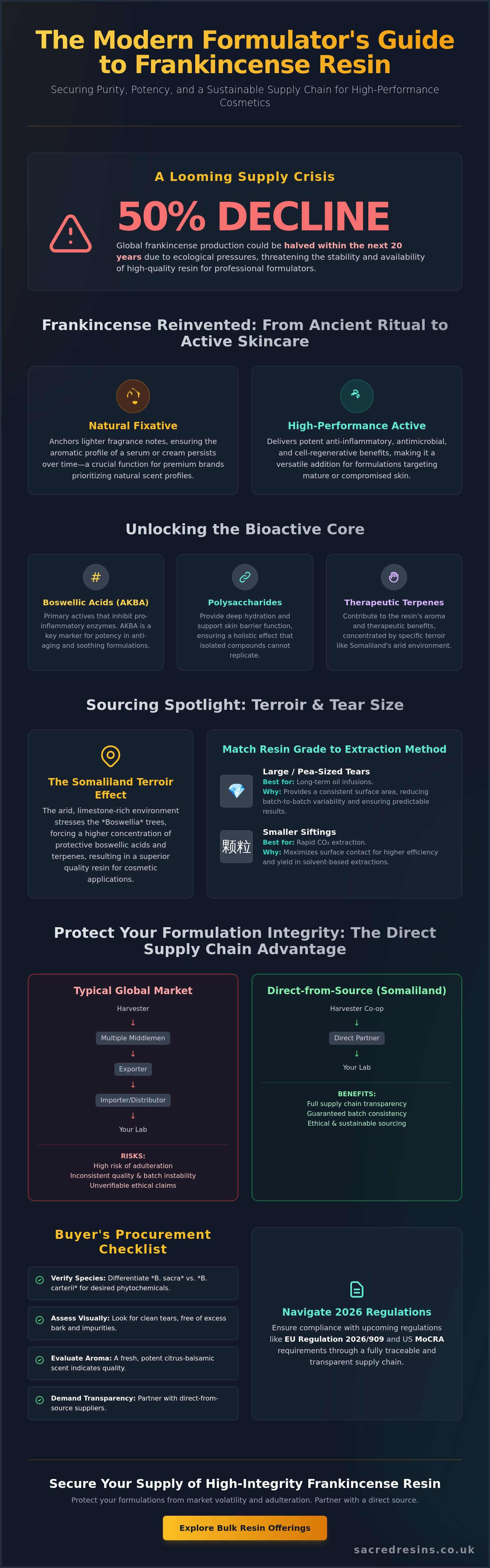
Research indicates that global frankincense production could be halved within the next 20 years due to ecological pressures and over-tapping. For professional formulators, this statistic underscores a difficult reality: securing high-quality frankincense resin for cosmetics is no longer just about finding a supplier; it's about ensuring long-term supply chain resilience. You likely understand the frustration of batch instability caused by inconsistent resin quality or the challenge of verifying ethical claims in a global wholesale market often clouded by adulteration.
This guide provides the technical roadmap you need to source high-grade, sustainably harvested resin that enhances both the efficacy and the ethical profile of your formulations. You'll learn how to secure a reliable supply of resin rich in acetyl-11-keto-beta-boswellic acid (AKBA) while navigating the latest 2026 regulatory shifts, such as the EU's Regulation 2026/909 and the updated MoCRA requirements in the United States. We will explore how direct-from-source transparency can improve your brand story and help you optimize extraction yields for premium face oils and serums.
Key Takeaways
- Understand the functional transition of frankincense from a traditional aromatic to a sophisticated skincare fixative with unique phytochemical properties.
- Learn to differentiate between the chemical profiles of Boswellia sacra and Boswellia carterii to optimize the extraction of active boswellic acids.
- Discover the logistical benefits of sourcing frankincense resin for cosmetics directly from the source to secure batch consistency and ethical transparency.
- Implement a professional procurement checklist using visual and aromatic markers to verify the purity and grade of wholesale resin shipments.
- Explore how a direct-link supply chain in Somaliland protects your formulation integrity against the risks of global market adulteration.
The Role of Frankincense Resin in Modern Cosmetic Formulation
Historically, frankincense was the cornerstone of ritual and ceremony. In 2026, the cosmetic industry has rediscovered this ancient gum-resin as a high-performance active. The transition from liturgical use to dermatological application is driven by a sophisticated understanding of its chemical architecture. Using frankincense resin for cosmetics allows formulators to move beyond synthetic additives, utilizing a single ingredient that provides both functional stability and therapeutic benefit. It's a move toward multi-functional ingredients that simplify the INCI list while increasing product potency.
The resin’s sensory appeal is matched by its logistical utility. As a natural fixative, it anchors lighter fragrance notes; it ensures that the aromatic profile of a serum or cream persists over time. This functional property is essential for premium brands that prioritize natural scent profiles over synthetic alternatives. Beyond aroma, the raw material offers a suite of therapeutic benefits, including documented anti-inflammatory, antimicrobial, and cell-regenerative effects. These properties make it a versatile addition to formulations targeting mature or compromised skin. Its ability to soothe irritation while promoting tissue repair places it at the center of modern medical-grade skincare trends.
Current 2026 trends indicate a strong return to raw, minimally processed botanical inputs. Formulators are moving away from heavily refined oils in favor of oleoresins that contain the tree's natural protective compounds. This shift isn't merely aesthetic. It's a response to a global market that values the preservation of the plant's original bio-activity. By incorporating raw frankincense resin for cosmetics, manufacturers can offer products that feel more grounded and effective, appealing to a demographic that equates minimal processing with higher purity.
Bioactive Compounds: Beyond the Scent
The efficacy of frankincense is rooted in its chemical makeup. Boswellic acids are the primary actives, known for inhibiting pro-inflammatory enzymes and reducing fine lines. This Frankincense resin overview explains their distribution across species. Unlike industrial extracts, raw resin preserves a broad phytochemical spectrum, including polysaccharides for hydration and barrier repair. This ensures a holistic skin-health profile that isolated compounds simply cannot replicate.
Market Demand for Ancient Botanicals
The clean beauty movement has shifted toward "ancestral efficacy." In 2026, buyers prefer botanical inputs that retain their natural integrity over highly processed alternatives. Frankincense supports the premiumization of the wellness sector, where ingredient heritage is a key value driver. Brands demonstrating transparent sourcing from remote origins build lasting consumer trust. This transition to raw resins reflects a wider industry commitment to authenticity and ethical stewardship.
Phytochemical Profiles: Selecting the Right Species for Skincare
Selecting the specific species of frankincense resin for cosmetics is a decision that dictates the biological activity of the final product. While retail consumers often view frankincense as a singular entity, B2B buyers must distinguish between the chemical signatures of Boswellia sacra and Boswellia carterii. The terroir of Somaliland plays a decisive role here; the arid, limestone-rich environment stresses the trees, forcing a higher concentration of protective secondary metabolites. This environmental pressure results in a superior chemical yield, particularly in terms of therapeutic terpenes and boswellic acids that are essential for high-performance skincare.
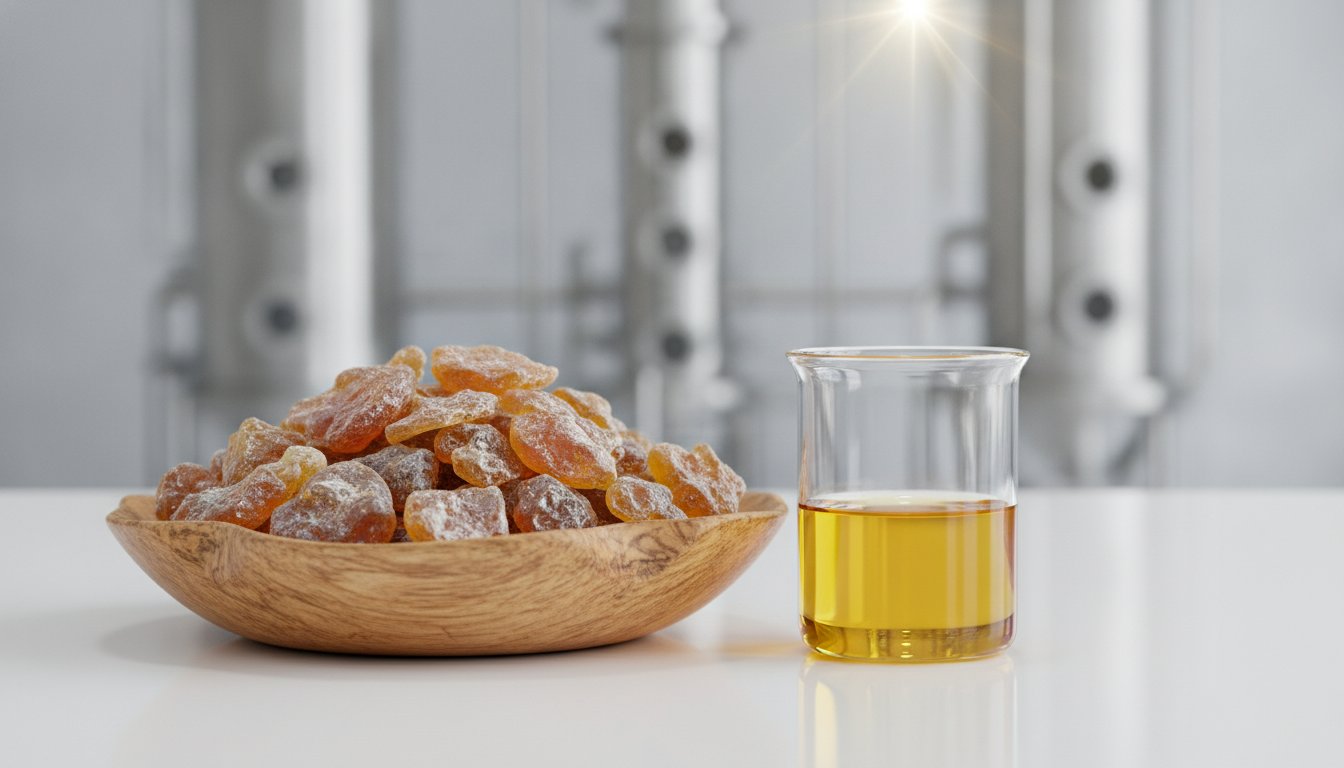
The physical size of the "tears" is more than an aesthetic choice; it directly influences extraction efficiency in a laboratory setting. Larger, cleaner tears provide a more consistent surface area for solvent or oil contact, which helps reduce the risk of batch-to-batch variability. For formulators optimizing their lab processes, pea-sized tears represent the optimal grade for long-term oil infusions, whereas smaller siftings are generally preferred for rapid CO2 extraction to maximize surface contact. If you are looking to secure high-integrity raw materials, you can view our bulk resin offerings to find the right grade for your specific formulation needs.
Boswellia Sacra: The Gold Standard for Anti-Aging
Boswellia sacra is prized for its high concentration of alpha-pinene, a monoterpene that significantly enhances skin penetration. This makes it the preferred choice for luxury face oils and targeted anti-aging serums where deep delivery of actives is paramount. Formulators seeking high-purity inputs should consult a premium frankincense resin grading guide to understand how color and clarity correlate with these bioactive levels. Its sophisticated, citrus-forward profile provides a high-end sensory experience that appeals to the premium wellness market.
Boswellia Carterii: Versatility in Body Care
Boswellia carterii offers a different, more earthy aromatic profile that excels in body lotions, artisanal soaps, and large-scale manufacturing. It remains a cost-effective solution for brands that require bulk volume without compromising on botanical purity. High-quality Carterii resin is identified by its golden-amber hues and lack of dark bark inclusions. Ensuring the longevity of these supplies requires a focus on sustainable frankincense harvesting, as ethical practices directly impact the resin's potency and the tree's future yield. By choosing frankincense resin for cosmetics that is harvested with care, brands can maintain a consistent phytochemical profile across multiple production cycles.
Sourcing Sustainably Harvested Frankincense: Ethical and Functional Benefits
Sourcing frankincense resin for cosmetics in 2026 requires a deeper commitment than a standard procurement transaction. In the Horn of Africa, sustainability is defined by the physiological health of the Boswellia trees rather than just chemical-free growth. When trees are over-tapped to meet aggressive market demands, the resulting resin often lacks the phytochemical density required for high-end skincare. Ethical harvesting practices limit the number of incisions per tree. This preserves the tree's immune system and ensures the resin retains its rich concentration of boswellic acids and antioxidants. There is significant scientific evidence for frankincense in skincare regarding its antioxidant and anti-inflammatory efficacy, but these benefits are only realized when the raw material is harvested at peak potency.
Fair-trade practices are inextricably linked to final product quality. When harvesters are paid fairly and directly, they have the time to perform meticulous on-site sorting. This results in "tears" that are free from bark, sand, and debris, which significantly reduces the filtration burden during your manufacturing process. For green beauty brands, the term "organic" often falls short in a wild-harvested context. Since Boswellia trees grow in wild, uncultivated landscapes, "sustainably wild-harvested" certifications provide a more accurate reflection of ecological stewardship than traditional agricultural labels. It's a distinction that matters to both the environment and the formulator.
Environmental Stewardship in Somaliland
Protecting the Boswellia forests is a community-led effort. By engaging in sustainable resin harvesting, brands support local biodiversity and ensure that these ancient ecosystems remain intact. Sourcing directly from the origin also minimizes the carbon footprint of the supply chain by eliminating unnecessary middle-tier transport and storage cycles. This grounded approach ensures that the frankincense resin for cosmetics you use is as responsible as it is effective.
Transparency as a Competitive Advantage
In 2026, transparency is a requirement for regulatory compliance, including the latest MoCRA facility registrations and EU allergen disclosures. Brands that can trace their resin back to specific regions in Hargeisa gain a significant competitive edge. These sourcing stories build deep consumer loyalty, as modern buyers increasingly demand proof of ethical stewardship. Moving away from anonymous wholesale markets toward direct partnerships ensures both the integrity of your supply and the strength of your brand narrative.
Procurement Standards: A Buyer’s Checklist for Cosmetic Grade Resin
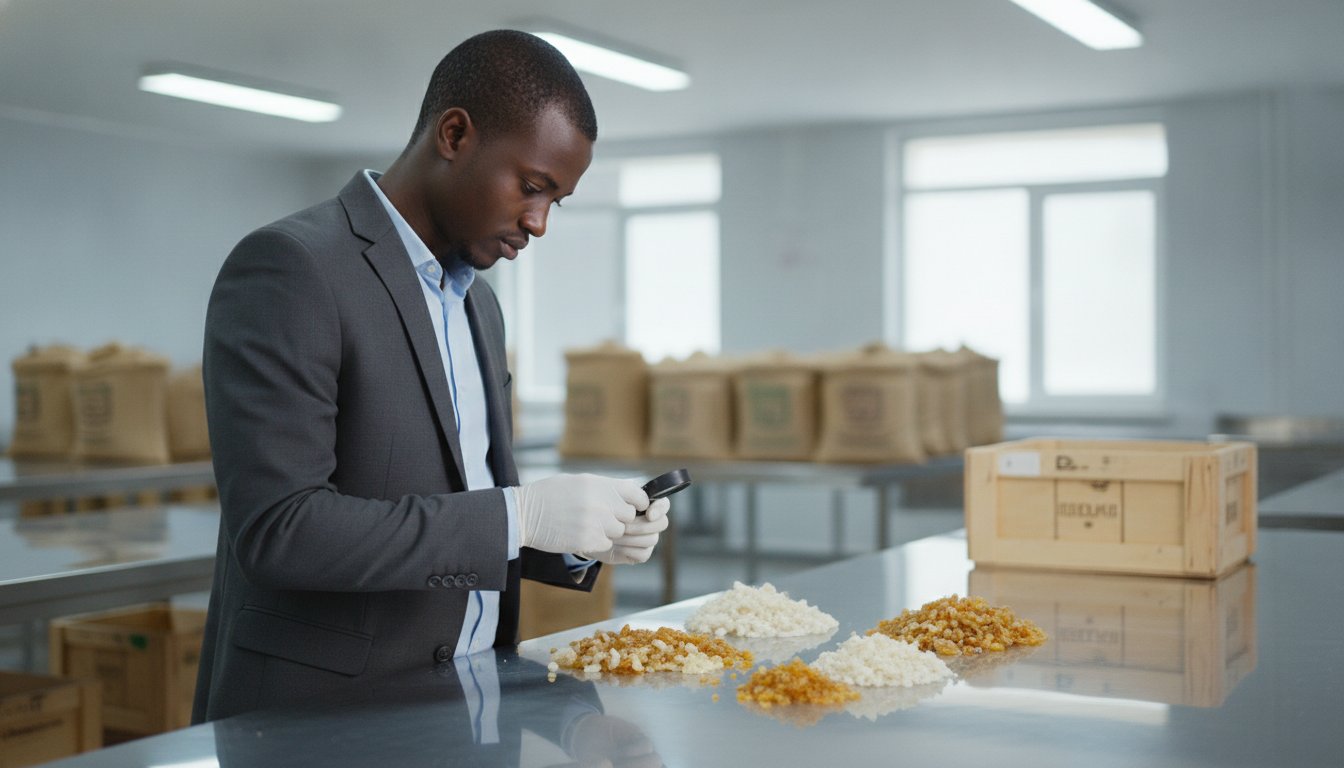
Establishing rigorous procurement standards is the only way to ensure batch stability in a volatile global market. For professional formulators, the evaluation of frankincense resin for cosmetics begins with a detailed visual and aromatic assessment. High-grade resin should exhibit a vitreous or waxy luster, indicating a high concentration of essential oils trapped within the gum-resin matrix. Purity is paramount. You must check for the absence of bark, sand, and dark inclusions, as these impurities can interfere with extraction yields and compromise the clarity of your final oil or serum. Aromatic testing serves as a secondary verification; pure resin should release bright, clean top notes when crushed, without the dusty or acrid scent of aged, oxidized stock.
Batch consistency is a logistical necessity for standardized cosmetic production. Without uniform grading, your R&D team cannot accurately predict the phytochemical output of each extraction cycle. This predictability is reinforced by comprehensive documentation. Every B2B shipment must be accompanied by three critical documents:
- Certificate of Analysis (COA): This provides the laboratory results for purity and active compound levels.
- Material Safety Data Sheet (MSDS): Essential for safety protocols and regulatory compliance under MoCRA.
- Phytosanitary Certificate: Required for international trade to verify the resin is free from pests and diseases.
Verifying Purity and Avoiding Adulteration
The global resin market often suffers from the addition of cheaper colophony or synthetic resins. Identifying these adulterants requires more than a visual check; it necessitates GC-MS testing to confirm the specific terpene profile. Raw resin offers more security than pre-mixed oils because its physical structure is much harder to manipulate with fillers without changing its texture and scent. Utilizing raw frankincense resin for cosmetics allows your quality control team to verify the material's integrity before it enters the production line. If you are ready to secure a traceable supply, you can request a quote for bulk resin directly from our Hargeisa facility.
Logistics and Storage for Manufacturers
Maintaining resin stability requires strict environmental controls. Once your shipment arrives, it should be stored in a cool, dry warehouse away from direct sunlight to prevent the volatile oils from evaporating. Optimizing wholesale resin worldwide shipping is equally vital for freshness; choosing a partner that understands the seasonal harvest cycles ensures you receive the most potent material. Most professional buyers operate with specific minimum order quantities (MOQs) to balance shipping costs with the need for fresh inventory, allowing for scalable growth as production demands increase.
Sacred Resins: Your Direct Supply Chain Partner in Somaliland
Sacred Resins operates as a direct link between the remote Boswellia forests of the Horn of Africa and the global manufacturing sector. By maintaining a permanent base in Hargeisa, we eliminate the logistical opacity that often plagues the international resin trade. This direct presence allows us to oversee every stage of the collection process, ensuring that the frankincense resin for cosmetics you receive is fresh, potent, and entirely traceable. For professional buyers, this means bypassing the inconsistencies of secondary wholesale markets and securing a supply chain that is as reliable as it is ethical. We provide a bridge that connects your laboratory directly to the source, ensuring the phytochemical integrity of your raw materials is never compromised by unnecessary intermediaries.
Our commitment to ethical stewardship is a core operational principle rather than a mere marketing claim. We prioritize long-term partnerships with harvester communities, ensuring fair compensation that discourages the harmful over-tapping practices discussed earlier in this guide. This approach protects the biological integrity of the trees and guarantees a consistent phytochemical yield for your formulations over successive seasons. Whether you're a high-volume manufacturer or a specialized cosmetic brand, our bulk solutions for Premium Frankincense Resin are designed to meet specific technical requirements while maintaining the highest standards of botanical purity. We understand that the future of your product line depends on the health of the forests we serve.
The Sacred Resins Quality Guarantee
Quality control at Sacred Resins is a hands-on process that begins at the point of harvest. Every batch of our resin is hand-sorted by specialists who understand the visual and aromatic markers of cosmetic-grade material. This meticulous grading ensures that you receive only the cleanest tears, free from bark and debris, which simplifies your internal filtration and extraction workflows. We maintain full transparency throughout the supply chain, providing the necessary documentation, such as COAs and phytosanitary certificates, for modern regulatory compliance. We invite professional brands to request samples of our current harvest for their R&D labs to verify the superior clarity and potency of our frankincense resin for cosmetics firsthand.
Partnering for the Future of Skincare
In a market where consumers value authenticity, we help wellness brands articulate a genuine story of origin and responsibility. Our logistical infrastructure is built to scale with your business, providing the flexibility to move from boutique trial batches to metric tonnes as your production demands grow. We handle the complexities of international shipping from Somaliland, ensuring that your raw materials arrive at your facility in optimal condition. To secure your supply for the upcoming production cycle and discuss your specific volume requirements, please Contact Sacred Resins for a wholesale quote today.
Elevating Your Botanical Supply Chain for 2026 and Beyond
As cosmetic standards evolve toward greater transparency and efficacy, the choice of raw materials becomes the defining factor for brand longevity. You've seen how specific species offer distinct bioactive advantages and how rigorous procurement standards serve as the first line of defense against batch instability. By focusing on frankincense resin for cosmetics that is sourced with ecological integrity, formulators can meet the rigorous demands of 2026 regulations while delivering superior skin-health benefits. It's about more than just a transaction; it's about respecting the heritage of the ingredient and the environment it comes from.
Sacred Resins facilitates this transition by providing a direct link to the source. Our bulk resin is directly sourced from our base in Hargeisa, Somaliland, where we maintain a transparent relationship with the land and its people. Every batch is ethically wild-harvested by local communities and hand-sorted to ensure the cosmetic purity and high phytochemical yield your R&D lab requires. This grounded approach to sourcing allows you to build a brand story rooted in integrity and professional-grade quality. We look forward to supporting your next breakthrough in high-performance skincare.
Secure Your Supply of Sustainably Harvested Frankincense Resin
Frequently Asked Questions
Is frankincense resin safe for all skin types in cosmetic formulations?
Frankincense resin is generally considered safe for most skin types when properly diluted in a carrier oil or formulated into a stable emulsion. Its high concentration of monoterpenes like limonene and alpha-pinene means that formulators should conduct patch tests and ensure the final concentration aligns with safety standards to prevent sensitization. It's particularly beneficial for mature or oily skin due to its astringent and regenerative properties that support skin health.
How do I extract the active ingredients from raw frankincense resin for a face oil?
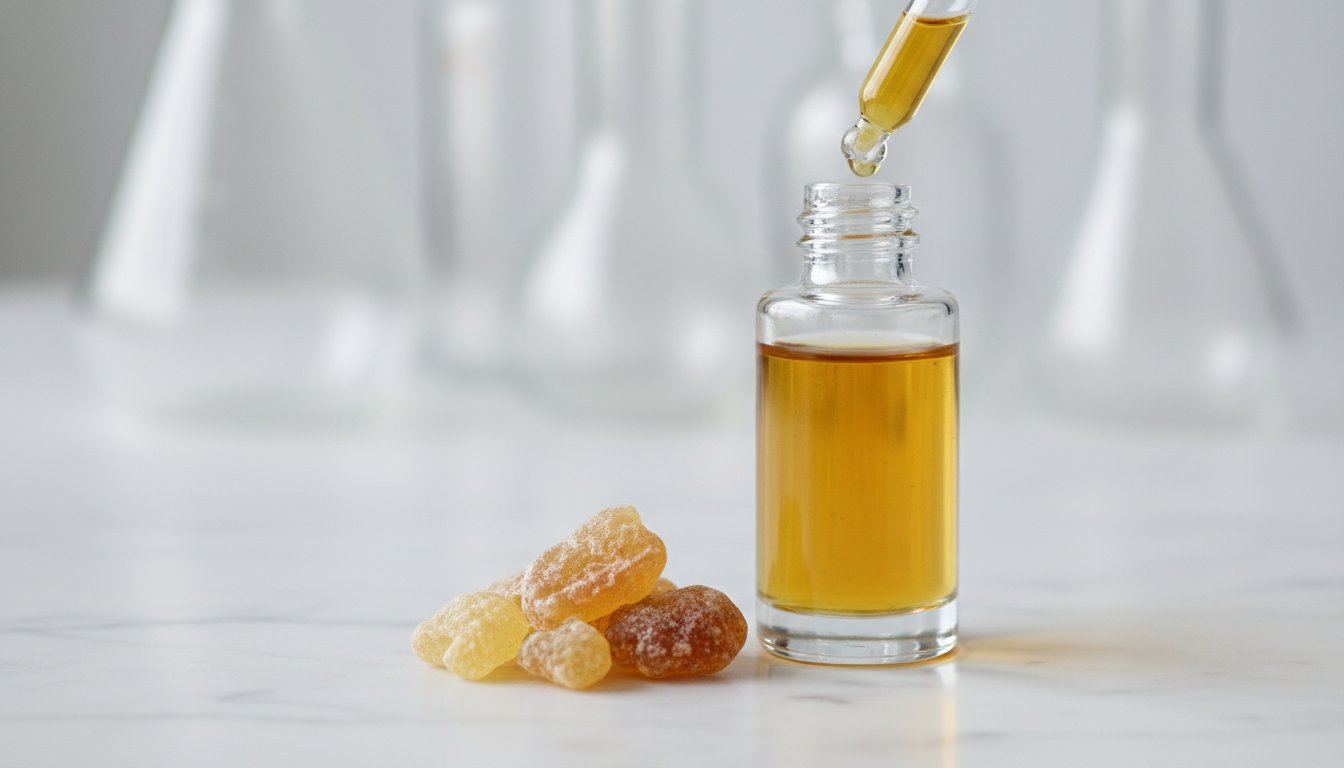
To extract the active compounds from frankincense resin for cosmetics, most formulators utilize a slow oil maceration process. You should grind the raw resin into a fine powder to increase the surface area before submerging it in a stable carrier oil like jojoba or squalane. Maintain a consistent, low heat below 40°C for several weeks to preserve the delicate boswellic acids while ensuring a high-potency infusion for your face oil.
What is the shelf life of raw frankincense resin for cosmetic use?
Raw frankincense resin possesses a naturally long shelf life of approximately two to three years when stored in optimal conditions. It's essential to keep the resin in an airtight container within a cool, dark, and dry environment to prevent the oxidation of its volatile oils. Over time, the resin may harden or lose some aromatic intensity, but its core phytochemical properties remain stable if you protect it from moisture and direct sunlight.
Can I use liturgical grade frankincense for high-end skincare products?
Liturgical grade resin is typically unsuitable for high-end skincare because it often contains significant amounts of bark, sand, and other botanical debris. These impurities can compromise the stability of your formulation and lead to batch contamination during the manufacturing process. For professional applications, you should exclusively source hand-sorted, high-purity resin that's been specifically graded for its clarity and phytochemical density to ensure a clean, professional-grade extract.
How does sustainably harvested frankincense impact the final product price?
Sustainably harvested resin often commands a higher wholesale price due to the ethical labor practices and limited tapping cycles required to maintain tree health. While the initial procurement cost is higher, this investment ensures long-term supply chain security and provides a powerful ethical narrative for your brand. Direct sourcing also reduces the costs associated with middleman markups, helping to balance the overall price of the final finished cosmetic product.
What certifications should I look for when buying bulk frankincense for cosmetics?
When purchasing bulk frankincense resin for cosmetics, you should prioritize suppliers that provide a comprehensive Certificate of Analysis and an MSDS for every batch. Certifications such as FairWild or organic are valuable indicators of ethical stewardship and environmental responsibility in the Horn of Africa. Additionally, ensure the supplier provides phytosanitary certificates to facilitate smooth international trade and verify that the material meets the stringent safety requirements of the industry.
Why is Somaliland considered the premier source for Boswellia sacra?
Somaliland is a premier source for high-quality resin due to its unique limestone-rich terroir and arid climate, which stress the trees into producing a more concentrated resin. This specific environment encourages a high yield of alpha-pinene and other therapeutic compounds that are highly prized in premium skincare formulations. The region also benefits from generations of traditional harvesting knowledge, ensuring that the resin is collected during the optimal seasonal cycles for maximum potency.
Does raw frankincense resin require special import permits for the UK or EU?
Importing raw resin into the UK or EU requires specific documentation, including a phytosanitary certificate to prove the material is free from pests and diseases. While frankincense species aren't currently listed under CITES Appendix II, regulations can change, so you should always verify the latest status with your local customs authority. Working with a direct supply partner ensures that all necessary international trade documents are correctly filed, preventing costly delays at the border.