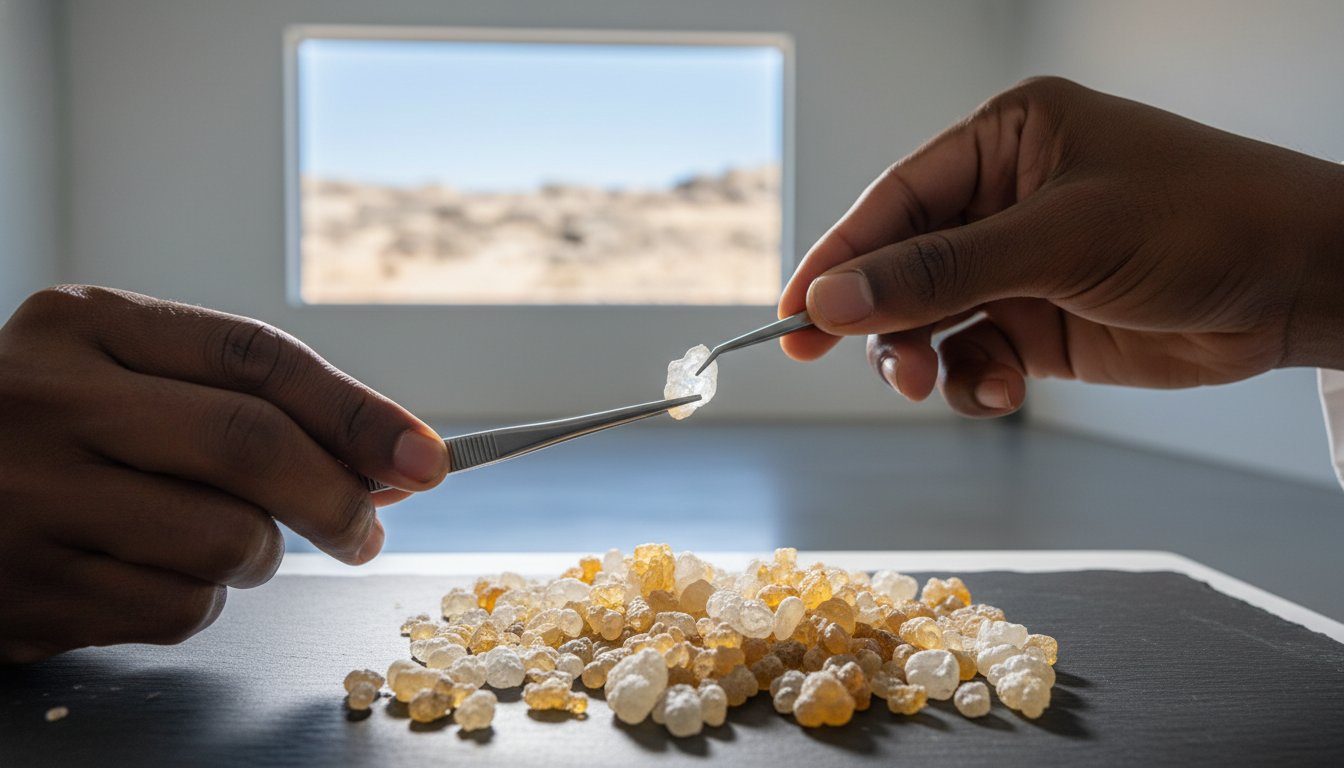
Scientific studies suggest that global frankincense production could decline by as much as 50 percent within the next two decades if current extraction methods don't change. For a business dependent on high-grade resins, this isn't just an environmental concern; it's a direct threat to your supply chain stability and product integrity. You've likely seen how over-harvesting leads to stressed trees, which ultimately produces adulterated or lower-quality resin that fails to meet professional standards. Adopting a focus on sustainable resin harvesting is no longer a choice but a necessity for securing a reliable, long-term supply of premium material.
We understand that you need more than just a vendor; you need a transparent partner who respects the botanical heritage of these ancient trees. This guide will show you how ethical sourcing protects the future of the frankincense market and ensures the chemical potency your customers expect. We'll outline clear criteria for evaluating suppliers, discuss the impact of shifting international regulations like the EU's Annex D monitoring, and provide the knowledge you need to educate your own end-users about the value of responsible sourcing.
Key Takeaways
- Understand the biological role of resin as the tree's immune system and why balancing extraction with regeneration is essential for long-term supply security.
- Learn why the "rest period" within the seasonal tapping cycle is the most significant factor in maintaining a healthy and productive Boswellia forest.
- Identify the direct link between sustainable resin harvesting and premium quality, ensuring your bulk resin retains the high therapeutic value your clients demand.
- Establish a clear procurement checklist to verify "direct-from-source" claims and eliminate the logistical opacity often found in traditional middleman networks.
- Discover how direct operational oversight in sourcing regions like Somaliland supports both forest conservation and the professional reliability of your resin supply.
What is Sustainable Resin Harvesting in 2026?
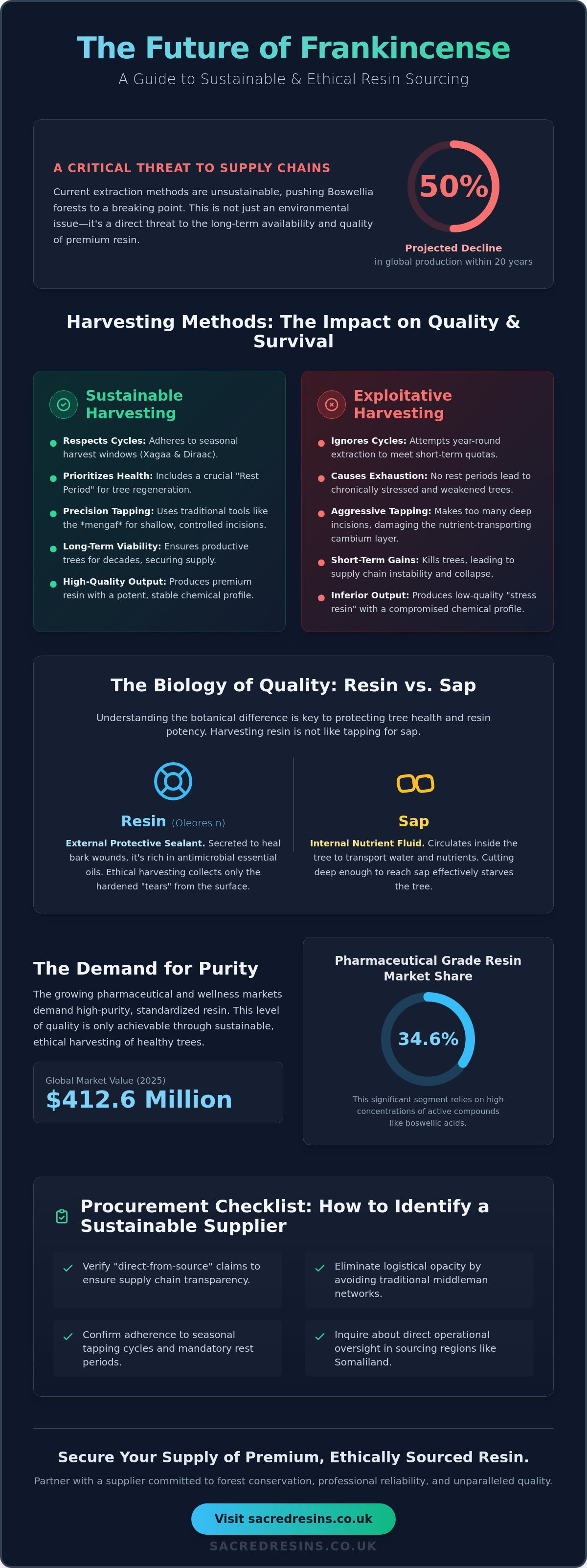
In 2026, the global market for botanical resins has reached a critical inflection point. With the market valued at $412.6 million in 2025, the pressure on wild Frankincense forests has never been more intense. Sustainable resin harvesting is defined as a precise equilibrium; it's the practice of extracting enough resin to meet commercial demand without exceeding the tree's biological capacity for regeneration. Unlike industrial exploitation, which prioritizes immediate volume, ethical harvesting respects the seasonal cycles of the Horn of Africa. It treats the tree as a living asset rather than a disposable resource.
Think of resin as the tree's immune system. When a Boswellia tree's bark is breached, it secretes oleoresin to seal the wound against pathogens, insects, and fungi. This substance isn't a byproduct; it's a vital survival fluid. Industrial over-exploitation ignores this biology by making too many incisions, leading to weakened trees that eventually perish. This creates a cycle of supply chain instability that threatens both the environment and your business's long-term access to premium materials.
The current surge in global demand is driven by a robust aromatherapy wellness culture and expanding pharmaceutical research into the anti-inflammatory properties of boswellic acids. In 2025, pharmaceutical-grade resin accounted for approximately 34.6 percent of total market revenues. This shift toward high-purity, standardized materials makes the case for ethical sourcing even stronger. You can't achieve pharmaceutical-grade results from trees that are dying from over-exploitation. True sustainability ensures that the chemical potency of the resin remains high, protecting the integrity of your final products.
The Biology of Resin Secretion
Boswellia trees produce oleoresin specifically to heal external bark damage. This substance is rich in antimicrobial essential oils that act as a natural defense. However, when trees are over-tapped, they enter a state of chronic stress. This "stress resin" often has a compromised chemical profile, resulting in inferior aromatic properties and lower concentrations of active compounds. For B2B buyers, this means the very quality you're paying for is lost when harvesting practices are aggressive. Quality and sustainability are fundamentally linked.
Sap vs. Resin: Clearing the Confusion
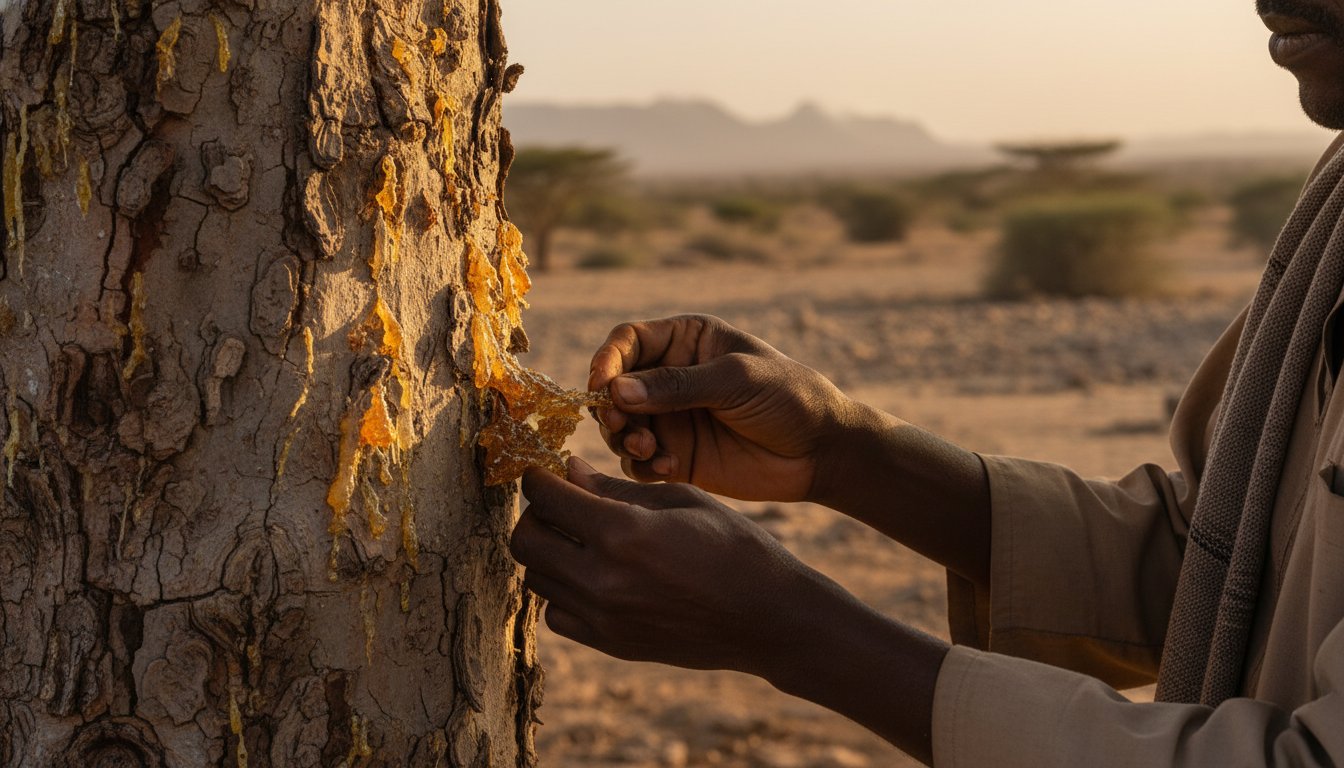
There's a common misconception that harvesting resin is similar to tapping a maple tree for sap. In reality, sap is an internal nutrient-carrying fluid, while resin is an external protective sealant. True sustainable resin harvesting involves collecting only the hardened "tears" that have crystallized on the bark after a controlled incision. This distinction is vital for tree health. If a harvester cuts too deep into the cambium layer, they disrupt the tree's nutrient transport, effectively starving it. Protecting your supply chain starts with ensuring your suppliers understand this fundamental botanical difference.
The Tapping Cycle: How Ethical Sourcing Works
Ethical sourcing isn't just about the volume of the harvest; it's about the precision of the timing. In the arid landscapes of Somaliland, the tapping cycle follows a rhythmic pattern that has been refined over centuries. Sustainable resin harvesting requires a profound understanding of these natural windows. While unmanaged operations might attempt year-round extraction to meet short-term quotas, professional suppliers strictly adhere to seasonal boundaries to prevent tree exhaustion. This disciplined approach ensures that the trees remain productive for decades rather than years.
The tools used in the process are just as critical as the timing. Traditional implements, such as the mengaf, allow for a level of precision that modern industrial tools often lack. This precision directly impacts the final grade of the resin. For example, the first "tears" of the season typically possess a different color and chemical profile than those collected later in the cycle. As a wholesale buyer, understanding this seasonal correlation helps you predict the specific attributes of the bulk frankincense resin you receive throughout the year, ensuring your inventory meets your exact specifications.
Traditional Harvesting Seasons in Somaliland
The harvesting calendar is primarily divided into two cycles: Xagaa, the summer harvest, and Diraac, the winter harvest. Each cycle relies on specific temperature and humidity levels to ensure the resin cures correctly on the bark. By 2026, climate change has begun shifting these traditional windows, making it harder for unmanaged operations to maintain consistency. We address this challenge by prioritizing rest years for specific forest tracts. Giving a tree a full year or more to recover is the most effective way to prevent the overexploitation for their aromatic resin that currently threatens wild Boswellia populations.
Incision Depth and Tree Health
The technical skill of the harvester determines the longevity of the source. A "shallow cut" technique is essential; the goal is to reach the resin ducts located just beneath the outer bark without piercing the cambium layer. A mature Boswellia tree can typically handle between 8 and 12 incisions per season, provided they are spaced correctly around the trunk.
- Signs of a healthy harvest: Small, clean tears that crystallize quickly and seal the wound effectively.
- Signs of lethal over-harvest: Large, gaping wounds, resin that "bleeds" without hardening, and a visible lack of new foliage on the upper branches.
Sustainable vs. Exploitative: The Impact on Quality
The biological integrity of the source is the single greatest predictor of chemical purity. When a Boswellia tree is pushed beyond its natural limits, the resin it secretes changes at a molecular level. Exploitative practices don't just kill the tree; they degrade the very therapeutic value that your business depends on. For a global wellness brand, the difference between a resilient forest and an over-tapped one is the difference between a premium product and a liability. Sustainable resin harvesting ensures that the resin you procure maintains its "Type-Specific" purity, such as the distinct profile of Boswellia carterii, without the interference of stress-induced chemical shifts.
Tree stress directly correlates with market adulteration. When local forests experience die-back due to over-exploitation, supply volumes drop. To compensate, middlemen often mix high-grade resins with lower-quality materials or even synthetic additives to meet their quotas. This lack of transparency creates significant risk for B2B buyers who require rigorous standardization. By prioritizing ethical sourcing, you eliminate the middleman opacity that often hides these quality issues, securing a product that is as pure in the warehouse as it was on the tree.
Chemical Potency and Harvest Ethics
Essential oil distillers and pharmaceutical manufacturers require resin from healthy, unstressed trees to achieve optimal yields of active compounds. Research shows that over-harvested batches often exhibit a significant drop in alpha-pinene and boswellic acid levels. These are the primary markers of quality and efficacy. Sustainable harvesting preserves the chemical fingerprint of the resin by protecting the tree’s metabolic capacity to synthesize a complex profile of volatile oils and acids. When the tree isn't fighting for its life, it can dedicate its energy to producing the high-register aromatic compounds your customers expect.
Supply Chain Stability for B2B Buyers
The frankincense market is historically prone to "boom and bust" cycles that can devastate a brand's long-term planning. Ethical sourcing acts as a buffer against this price volatility. By investing in the sustainable production of frankincense, businesses prevent the environmental collapse that leads to sudden supply shortages. While paying fair-trade premiums for harvested material may seem like a higher upfront cost, the long-term ROI is found in a stable, predictable supply chain. It’s far more cost-effective to support a thriving forest today than it is to source from a dying one tomorrow. This commitment to the Horn of Africa isn't just about ethics; it's a calculated strategy for logistical reliability and brand integrity.
Procurement Checklist: Identifying Sustainable Resin
Vetting a supplier in the frankincense market requires moving beyond surface-level marketing claims. For professional buyers, sustainable resin harvesting is verified through transparency and specific logistical data points. You must look for a direct link between the collection site and the warehouse to ensure that the material hasn't been diluted or compromised by multiple middleman layers. A reliable supplier should be able to provide a clear harvest-to-rest ratio, proving that their trees are given the necessary fallow periods to recover and regenerate.
Documentation is the cornerstone of a professional supply chain. When procuring resin in bulk, you should request batch-specific purity tests and origin documentation that tracks the material from the specific forest tract to the point of export. This level of detail isn't just for quality assurance; it's a regulatory necessity. With the EU expanding its fragrance allergen labeling requirements by July 2026, having precise data on your resin's origin and chemical profile is essential for maintaining compliance in global markets.
- Direct-from-Source Verification: Ask for evidence of direct operations in the sourcing region to eliminate middleman opacity.
- Harvest-to-Rest Ratio: Confirm that the supplier enforces rest periods of at least one full year for tapped trees.
- Social Impact Audit: Determine if the harvesters are treated as partners in the value chain, ensuring fair pay and ethical labor standards.
- Purity Testing: Request GC-MS reports for each batch to verify the presence of key therapeutic compounds like boswellic acids.
Red Flags in Bulk Resin Sourcing
Price is often the first indicator of a compromised supply chain. If bulk rates are significantly lower than the 2025 wholesale market average of $40 to $80 per kilogram for high-quality resins, it's a signal of potential exploitation or adulteration. Generic origin labels like "Product of Africa" are equally problematic. Precise sourcing from specific regions like Somaliland ensures you aren't inadvertently supporting operations under enforcement, such as the U.S. Customs and Border Protection orders regarding forced labor. Additionally, resin that appears overly sticky or "fresh" outside of the traditional Xagaa or Diraac harvest windows suggests it may have been extracted out of season, damaging tree health.
The Role of Fair Trade in Sustainability
Fair wages are the most effective deterrent against tree over-tapping. When harvesters receive a fair share of the value chain, they don't have to over-exploit the forest to survive. We maintain a direct presence in Hargeisa to oversee these operations and ensure that our harvesters are empowered as stewards of the land. To streamline your sourcing process, you can review our How to Buy Frankincense Bulk: A B2B Procurement Checklist for deeper insights into grade selection and ethical verification. For those looking to secure a verified supply, you can view our current bulk frankincense inventory to see the results of these rigorous ethical standards.
The Sacred Resins Commitment to the Horn of Africa
Direct operational oversight in Hargeisa serves as the foundation of our supply chain. By maintaining a physical presence in Somaliland, we bridge the gap between remote harvesting sites and the global wholesale market. This direct involvement ensures that sustainable resin harvesting is practiced at every stage, from the initial incision to the final export. We don't rely on third-party reports; we engage with the forests and the communities themselves to verify that every kilogram of resin meets our rigorous ethical and quality standards.
Our 2026 initiatives focus on institutionalizing forest stewardship through harvester education and direct investment. We provide training on the biological limits of the Boswellia tree, emphasizing the long-term economic benefits of the rest-period cycles that allow for natural regeneration. By treating harvesters as professional partners rather than just labor, we foster a culture of conservation that protects the resource for future generations. This transparency is the core of our aromatic resin wholesale business, providing you with the confidence that your supply is both reliable and responsible.
From Hargeisa to the World: A Transparent Journey
The journey of our premium resins begins with meticulous sorting at our Hargeisa facility. Each batch is graded based on color, size, and purity, then packaged using methods designed to preserve the volatile aromatic compounds during international transit. Our direct partnership model with local Somaliland harvesting families ensures that the economic value remains within the community, providing a stable livelihood that discourages exploitative practices. You can learn more about how this direct link benefits your business in our guide, Direct from Hargeisa: The Somaliland Sourcing Advantage.
The Future of Frankincense in 2026
Reforestation is no longer an optional endeavor; it's a core component of our 2026 strategy. We actively support sustainable forest management programs that focus on protecting young saplings from livestock grazing and insect infestations. When you choose to purchase bulk resin through an ethical framework, your investment contributes directly to the longevity of the Boswellia species. It's a commitment to a future where these ancient traditions and modern industries can thrive in harmony. Partner with a sustainable resin supplier today to secure your supply of premium, ethically sourced resins and support the continued health of the Horn of Africa's unique botanical heritage.
Securing the Future of Your Frankincense Supply
The global frankincense market is undergoing a profound shift where ethics and quality are no longer separate concerns. By prioritizing sustainable resin harvesting, your business doesn't just protect an ancient botanical species; it secures a reliable supply of high-grade resin with a verified chemical profile. We've explored how seasonal rest periods and precise tapping techniques are essential for maintaining the therapeutic value your customers demand. These practices prevent the forest die-back that leads to market volatility and adulteration, ensuring your brand remains a leader in quality and integrity.
Choosing a partner with a direct presence in the Horn of Africa is the most effective way to ensure your procurement meets these rigorous standards. We provide direct-from-source transparency through our operations in Hargeisa, where every batch is ethically sourced and sorted by hand to guarantee purity. With worldwide B2B shipping and comprehensive origin documentation, we offer the logistical precision required by modern manufacturers and wellness brands. Browse our sustainably harvested bulk resins direct from Somaliland to strengthen your supply chain today. We look forward to building a stable, ethical partnership that honors the heritage of these sacred resins while supporting your professional growth.
Frequently Asked Questions
Is frankincense resin endangered in 2026?
Frankincense is not yet listed on CITES Appendix II, but Boswellia species were added to Annex D of the EU Wildlife Trade Regulations in January 2026. This monitoring reflects growing concerns about habitat loss and over-exploitation. Current research indicates that without a shift toward sustainable resin harvesting, production levels could drop by 50 percent within twenty years. This makes ethical sourcing a critical factor for long-term supply security.
How can I tell if my bulk frankincense was sustainably harvested?
Verification requires transparency beyond simple marketing claims. You should request origin documentation that identifies the specific region of harvest, such as Somaliland, and ask for the supplier's harvest-to-rest ratio. Ethical practices involve giving trees a fallow period of at least one year. Direct-from-source suppliers should also provide batch-specific purity tests, such as GC-MS reports, to ensure the resin hasn't been adulterated by middlemen during the procurement process.
What happens to a tree if it is over-tapped for resin?
Over-tapping effectively starves the tree by disrupting its internal nutrient transport. When harvesters make too many incisions or cut too deep into the cambium layer, the tree loses its ability to heal and fight off pathogens. This results in chronic stress, reduced foliage, and a significant decline in seed production. Eventually, the tree's immune system collapses, making it an easy target for wood-boring insects and permanent forest die-back.
Why is sustainable resin more expensive than standard wholesale options?
The price of sustainable resin harvesting accounts for the necessary fallow periods and fair wages for local communities. When trees are given time to rest, the immediate yield is lower, which requires a price premium to maintain economic viability. Additionally, ethical sourcing includes direct logistical oversight and fair-trade payments. These investments prevent the environmental collapse and forced labor issues that often hide behind the lower prices of standard wholesale options.
Does the harvesting method affect the quality of essential oil distillation?
Distillation quality is fundamentally linked to the health of the source tree. Resin from over-tapped trees often shows a marked decrease in essential oil yield and a drop in active compounds like alpha-pinene. For professional distillers, this means a lower-quality final product with a compromised aromatic profile. Sustainable harvesting ensures the tree maintains the metabolic energy required to synthesize a complex and potent chemical fingerprint during the secretion process.
Can resin be "certified organic" in the wild-crafting process?
While most frankincense is wild-crafted rather than farmed, it can still achieve organic certification through rigorous forest management audits. These certifications verify that the harvesting area is free from synthetic pesticides and that the collection methods don't damage the ecosystem. For B2B buyers, this provides an extra layer of assurance regarding the purity of the material and the integrity of the land from which it was sourced.
How does Sacred Resins ensure fair trade for its harvesters in Somaliland?
We manage our supply chain directly from our facility in Hargeisa to ensure that value stays with the harvesters. By removing the opaque layers of middlemen, we can pay our harvesting partners a rate that reflects the true market value of their work. This partnership model empowers local families as long-term stewards of the forest, creating a stable economic foundation that discourages the desperate over-tapping of trees for survival.
What is the best time of year to order fresh bulk resin?
The best time to order is immediately following the primary harvest windows in Somaliland. The Xagaa (summer) and Diraac (winter) cycles produce the highest volumes of new material. Aligning your procurement with these seasonal cycles ensures you receive resin with its full aromatic potency and chemical integrity. Professional buyers often coordinate their largest orders during these times to secure the most premium grades before they enter long-term storage.