Why does one batch of Boswellia carterii produce a rich, aromatic return while another, seemingly identical shipment leaves your profit margins thin? Many distillers operate under the assumption that raw material is a static variable, but the truth is that your frankincense essential oil yield is largely determined long before the resin reaches the steam. Unpredictable results from bulk batches don't just complicate your production schedule; they directly impact your bottom line in a global market projected to reach over $700 million by 2032.
You likely recognize the persistent tension between the rising cost of premium resins and the necessity for consistent, high-quality output. It's difficult to maintain professional standards when contamination or low-grade material dilutes your ROI and complicates your logistics. This guide is designed to help you navigate these complexities by identifying the most efficient resin species and establishing a more transparent, reliable supply chain. We'll explore how botanical purity, sourcing origins in regions like Somaliland, and the specific bark-to-resin ratio dictate your final oil volume. By understanding these variables, you'll gain the technical framework needed for accurate yield forecasting and more sophisticated production planning.
Key Takeaways
- Establish a reliable benchmark for your production by understanding why a typical frankincense essential oil yield ranges between 3% and 6% for premium resin.
- Evaluate the distillation efficiency of different botanical species, identifying which varieties offer the most robust chemical profiles for your specific manufacturing needs.
- Protect your profit margins by learning to identify high bark-to-resin ratios and common wholesale adulterants that can artificially inflate weight while reducing output.
- Refine your extraction process with best practices for resin grinding and slurry ratios that maximize volatile oil recovery without compromising quality.
- Gain a competitive advantage by streamlining your supply chain through direct procurement, ensuring you receive the freshest material available for distillation.
Understanding the Variables of Frankincense Essential Oil Yield
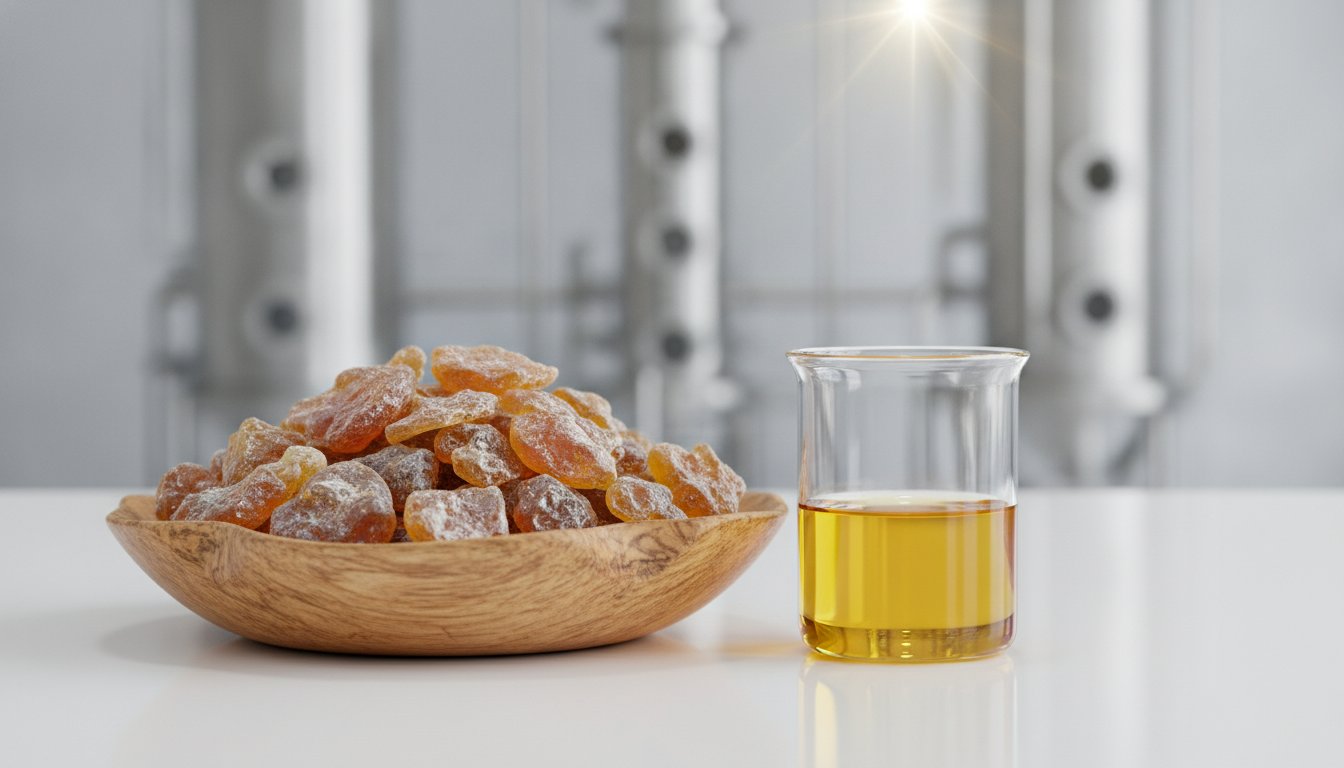
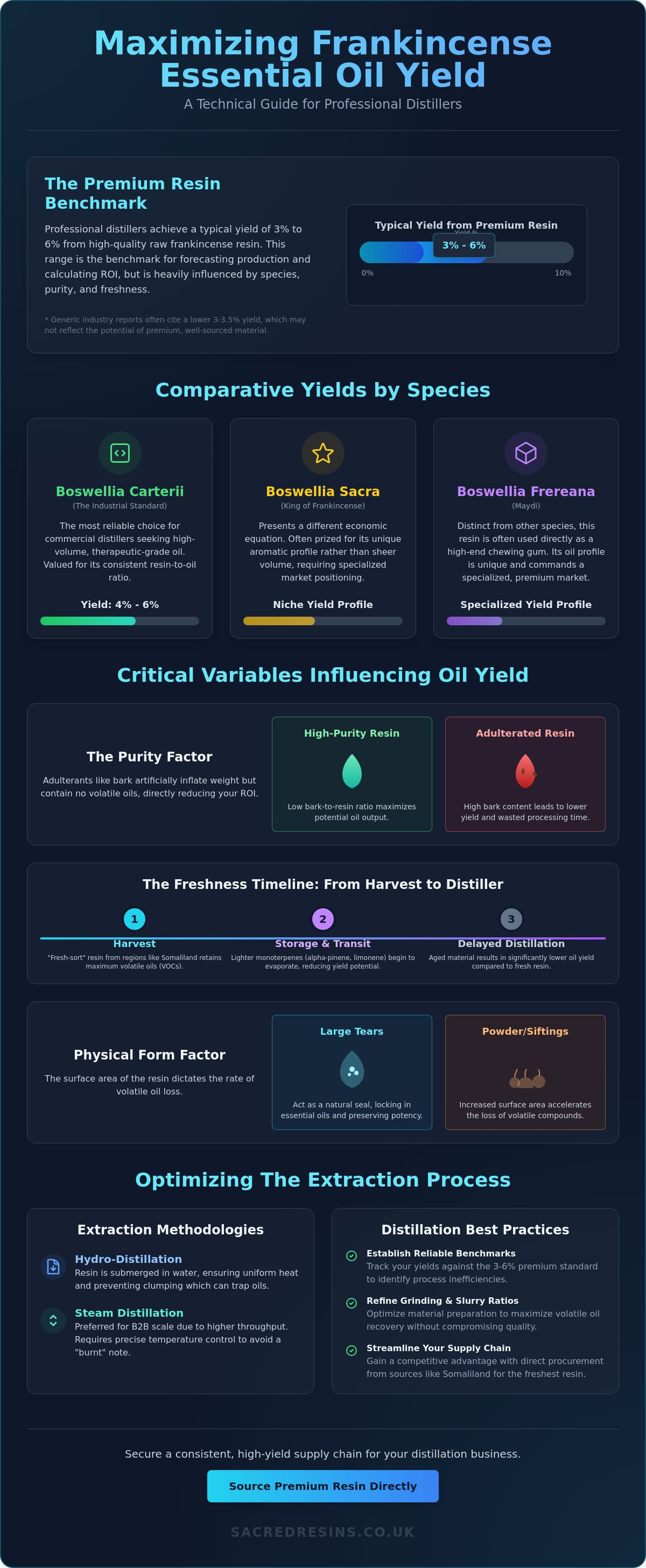
In the context of commercial production, frankincense essential oil yield refers to the specific percentage of volatile oil successfully extracted from the raw oleoresin by total weight. While some generic industry reports suggest a standard yield of 3% to 3.5%, professional distillers handling high-quality material often anticipate a range between 3% and 6%. This variance isn't accidental; it's a direct result of the resin's chemical integrity and physical handling before it ever reaches the boiling chamber.
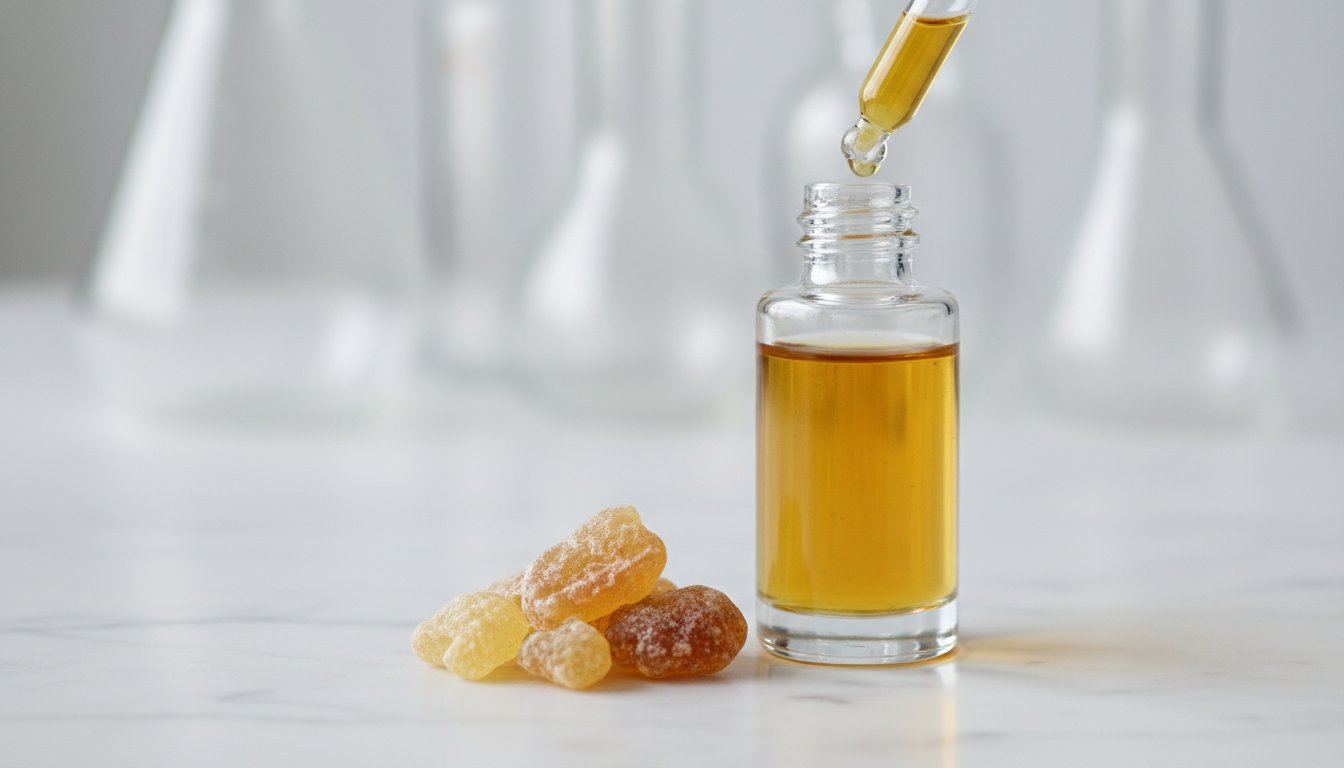
The aromatic profile of Frankincense is composed of complex volatile organic compounds (VOCs) that are inherently unstable. These molecules begin to degrade or evaporate the moment the resin is harvested from the Boswellia tree. The physical form of the raw material plays a decisive role in this preservation. Large, intact "tears" serve as a natural protective seal, locking in the essential oils within a hardened exterior. In contrast, powdered resins or smaller siftings increase the surface area exposed to oxygen. This exposure accelerates the loss of the very VOCs that determine your final distillation output.
Steam vs. Hydro-Distillation: Impact on Extraction Rates
Choosing the right extraction method is essential for maximizing your return on investment. Hydro-distillation involves submerging the resin in water, creating a slurry that ensures uniform heat distribution through the resin paste. This method is particularly effective for preventing the resin from clumping, which can otherwise trap oils and lower the yield. For large-scale B2B operations, steam distillation is often the preferred choice because it allows for significantly higher throughput and faster processing times. The key to success with steam is precise temperature control. Excessive heat can result in a "burnt" olfactory note that diminishes the quality and market value of a high-yield batch.
The Freshness Timeline: From Harvest to Distiller
The time elapsed between harvest and distillation is a critical variable in oil production. Resin sourced as "fresh-sort" directly from regions like Somaliland typically offers a much higher yield than material that has sat in regional warehouses for months. During prolonged transit and storage, lighter monoterpenes like alpha-pinene and limonene are the first to evaporate. Maintaining a strict storage protocol, including climate-controlled environments and airtight bulk packaging, is vital for any professional operation. By securing resin shortly after the harvest cycle, distillers ensure they're working with material that retains its full aromatic potential and maximum frankincense essential oil yield.
Comparative Yields by Species: Carterii, Sacra, and Frereana
The botanical species you select is perhaps the single most influential factor in determining your final frankincense essential oil yield. Each Boswellia variety possesses a distinct chemical blueprint that dictates how much volatile oil can be liberated during the distillation process. While one species might be rich in monoterpenes like alpha-pinene, another may be dominated by esters or heavier molecules that require different extraction durations. Understanding these profiles is vital for any distiller looking to balance production costs with the desired aromatic or therapeutic outcome.
Boswellia Carterii: The Industrial Standard
Boswellia carterii is widely regarded as the industrial workhorse of the frankincense world. For commercial distillers, it's the most reliable choice because it consistently offers a yield between 4% and 6% when processed correctly. This species is characterized by a high alpha-pinene content, which serves as a primary marker for successful distillation. Resins sourced from the Cal Madow region of Somaliland are particularly valued for their efficiency. Their consistent resin-to-oil ratio allows for predictable production schedules and stable ROI. If your goal is a high-volume therapeutic oil that meets international standards, carterii remains the most logical starting point.
Boswellia Sacra and Frereana: Niche Yield Profiles
Boswellia sacra, often referred to as the "King of Frankincense," presents a different economic equation. While its cost is typically higher than carterii, its yield expectations sit slightly lower, generally ranging from 3% to 5%. However, what it lacks in raw volume, it makes up for in chemical complexity. It contains a superior limonene profile, making it the preferred choice for high-end perfumery and luxury wellness products. According to research on distillation parameters, the extraction of these specific molecules is highly sensitive to time and temperature, requiring a more nuanced approach than the standard industrial grind.
In contrast, Boswellia frereana, known locally as Maydi, offers a unique challenge. It contains a very low essential oil content, often yielding less than 1% through traditional steam distillation. Its value isn't found in the oil still but rather in its use as a high-grade chewing resin or through specialized CO2 extraction methods. For distillers, attempting to extract oil from pure frereana is rarely cost-effective. Many professional operations use strategic blending, mixing small amounts of specialized resins with high-yield batches to achieve a specific aroma without sacrificing their overall frankincense essential oil yield. If you are refining your sourcing strategy, acquiring premium frankincense resin from direct channels ensures you receive the correct species for your specific yield targets.
The Purity Factor: How Adulteration Destroys Distillation ROI
For a professional distiller, the true cost of raw material isn't found on the invoice; it's revealed in the separator. Adulteration in the wholesale supply chain is a significant threat to your frankincense essential oil yield and overall profitability. When bulk resin is diluted with non-volatile materials, you aren't just paying for dead weight. You're also paying for the energy, labor, and time required to process material that offers zero aromatic return. High-purity resin is a prerequisite for a predictable and sustainable production model.
One of the most pervasive issues in lower-grade shipments is the "Bark Ratio." While some bark is inevitable in wild-harvested resins, excessive amounts skew the weight of your batch significantly. Bark absorbs water and steam during distillation but yields no oil. It acts as a sponge, potentially trapping the very volatiles you're trying to extract. Beyond botanical waste, common adulterants like sand, stones, and non-Boswellia gums are frequently introduced to increase bulk weight. These inorganic materials are particularly damaging to industrial equipment. Sand acts as an abrasive on seals and valves, while foreign gums can create a scorched residue that increases cleaning downtime and accelerates equipment wear.
Economic Analysis of Resin Grading
A simple comparative analysis demonstrates why "cheap" resin is often the most expensive choice for a business. Consider a scenario where a distiller processes a batch of low-grade siftings with a 3% yield versus a premium resin with a 5.5% yield. Even if the premium material carries a higher initial price point, the cost per liter of oil produced is frequently lower because the extraction efficiency is nearly doubled. Furthermore, high-purity Grade A tears produce a superior hydrosol byproduct. When the raw material is free from dirt and foreign gums, the resulting floral water is clearer and more stable, providing an additional revenue stream that lower-grade resins simply cannot match.
Visual Indicators of High-Yield Potential
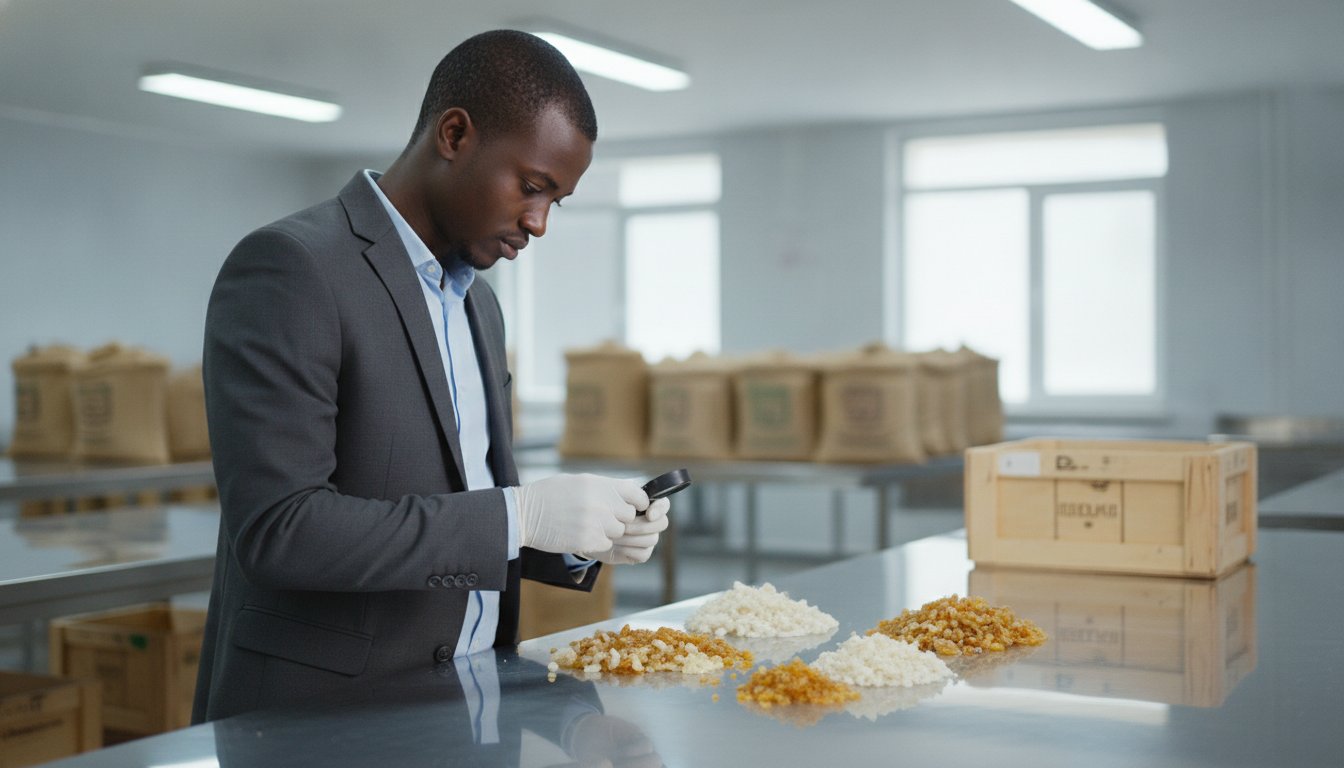
Identifying high-yield material requires a keen eye for physical properties. Quality resin should exhibit a certain level of clarity and a characteristic "stickiness" when warmed, indicating a high concentration of volatile oils. You can also perform a "Snap Test" on larger tears. A fresh, oil-rich tear should fracture cleanly when pressured, revealing a glassy, translucent interior. If the resin feels rubbery or appears dull and dusty throughout, it's likely aged or poorly stored, which means the frankincense essential oil yield will be compromised. To ensure your production meets these standards, you should verify purity with our guide on high grade frankincense resin before committing to large-scale procurement.
Optimizing Extraction: Best Practices for High-Yield Distillation
Achieving the maximum frankincense essential oil yield requires more than just high-quality resin; it demands technical precision during the extraction phase. Even the finest Boswellia carterii tears can underperform if the distillation parameters are poorly managed. Professional distillers focus on the intersection of temperature, surface area, and time to ensure every volatile molecule is successfully liberated from the gum-resin matrix.
The 'Slurry' Method is a foundational technique for optimizing this process. By maintaining a specific water-to-resin ratio, you ensure maximum surface area contact between the steam and the raw material. This approach is particularly effective at preventing the formation of a 'resin plug'. This plug occurs when the gum fuses into a solid, impermeable mass at the base of the still, effectively insulating the volatile oils from the steam and drastically reducing your output. Proper agitation or the use of internal racks can help maintain the slurry's consistency throughout the run.
Efficiency also relies on knowing when to conclude the process. Distillation follows a curve of diminishing returns. The 'tail' of the run often yields heavier sesquiterpenes, which are valuable for their fixative properties, but as the flow rate drops, the energy costs required to maintain steam pressure can quickly exceed the value of the oil recovered. Balancing these factors is essential for maintaining a healthy production ROI.
Pre-Distillation Processing
Grinding is a delicate balance. Traditional milling can generate significant friction heat, causing lighter volatiles to evaporate before they ever reach the still. Cryogenic grinding is the gold standard for preserving these top notes, as it uses liquid nitrogen to keep the resin brittle and cold. For older or particularly hardened resin batches, a 24-hour soak in room-temperature water helps rehydrate the gum and prepares it for more efficient steam penetration. To maximize your final return, the optimal particle size for frankincense distillation should be a consistent coarse grind between 2mm and 4mm, ensuring the steam can pass through the material without causing it to clump into a non-permeable mass.
Monitoring the Distillate
Real-time analysis is vital for consistency across batches. Using refractive index testing allows you to determine the exact end-point of a run by monitoring the density of the oil as it exits the condenser. This data helps you separate the bright, pinene-rich top notes from the deeper, heavier compounds found later in the process. Additionally, optimizing cooling temperatures in your condenser is critical. If the cooling water is too warm, light volatiles will remain in a gaseous state and escape your collection vessel, directly lowering your frankincense essential oil yield. To secure the raw materials necessary for these high-performance extraction methods, you can buy premium frankincense resin directly from our ethically managed supply chain.
Sourcing Strategy: Securing High-Yield Resin Directly from Somaliland
The final pillar of maximizing your frankincense essential oil yield lies in the logistics of your supply chain. While technical distillation parameters are vital, they can't recover aromatic molecules already lost to time and poor storage. Securing resin directly from the source in Somaliland, particularly through hubs like Hargeisa, provides a decisive advantage. By minimizing the interval between the tree's harvest and the material's export, you ensure the resin retains the high concentration of monoterpenes necessary for a profitable extraction.
Procuring material direct-from-source effectively eliminates the "middleman aging" that plagues much of the wholesale market. Many commercial batches spend months in regional warehouses or transit hubs before reaching a Western distiller. During this period, the volatile organic compounds (VOCs) identified in earlier sections begin to dissipate. Sacred Resins prioritizes a streamlined path, acting as a transparent link between remote harvesting communities and global manufacturers. Our approach to sorting and grading is specifically tailored to the needs of essential oil distillers, focusing on cleanliness and the preservation of the resin's natural chemical integrity.
Sustainability isn't just an ethical choice; it's a commercial necessity for high-yield production. Trees that are over-tapped or harvested under stress produce resin with a higher proportion of gum and a lower percentage of volatile oil. Ethical harvesting practices, which respect the natural recovery cycles of the Boswellia trees, result in healthier botanical specimens and superior raw material. This commitment to stewardship ensures that your frankincense essential oil yield remains stable year after year, protecting your supply chain from the volatility of over-exploited regions.
The Somaliland Advantage for B2B Buyers
Somaliland serves as one of the world's most significant exporters, providing direct access to the industrial workhorse Boswellia carterii and the specialized Boswellia frereana. Working directly with a supplier in this region offers unparalleled transparency. You can track your shipment from the high-altitude forests of the Cal Madow mountain range to the shipping container. This level of oversight ensures that the resin hasn't been diluted with inferior gums or non-volatile adulterants. You can learn about our commitment to sustainable resin harvesting to see how these practices support both the ecosystem and your production goals.
Scaling Your Essential Oil Production
Moving from trial batches to high-volume container orders requires a partner capable of providing consistent grading. We offer custom sorting services that allow you to request specific resin sizes or purity levels based on your exact yield targets. Whether you require premium tears for a luxury fragrance line or high-purity siftings for industrial-scale distillation, our logistical framework is designed to scale with your business. For detailed information on our current stocks, please contact us for wholesale frankincense resin pricing and yield data.
Achieving Precision in Every Distillation Run
Mastering your frankincense essential oil yield is a process that begins long before the steam enters the still. It requires a sophisticated understanding of botanical species, a rigorous approach to resin purity, and a commitment to sourcing material that hasn't been degraded by prolonged storage or middleman interference. By prioritizing high-grade tears and maintaining precise extraction parameters, you can transform your production from an unpredictable expense into a reliable, high-margin operation.
At Sacred Resins, we provide the logistical foundation for this efficiency. Our material is directly sourced from Hargeisa, Somaliland, and undergoes specialized sorting designed specifically for professional distillers. Because our resins are ethically harvested, they retain the maximum volatile oil content required for superior output. We're here to help you establish a transparent supply chain that respects ancient traditions while meeting modern industrial standards. Secure high-yield resin for your next distillation—Buy Frankincense Bulk and experience the difference that fresh, authentic resin makes to your final product.
Frequently Asked Questions
What is the average yield of frankincense essential oil?
Most commercial distillers expect a yield between 3% and 6% when processing high-quality resin. While some industrial reports suggest a lower benchmark of 3.5%, premium material from recent harvests often reaches the higher end of this spectrum. The final volume depends heavily on the botanical species and the level of purity in the raw batch.
Which species of frankincense has the highest oil yield?
Boswellia carterii is widely recognized as the most efficient species for oil production, typically offering a 4% to 6% return. While Boswellia sacra is highly prized for its olfactory complexity, its yield is generally slightly lower, ranging from 3% to 5%. In contrast, Boswellia frereana contains very little volatile oil and is rarely used for steam distillation.
How does resin age affect the essential oil extraction rate?
The extraction rate decreases significantly as resin ages because volatile organic compounds begin to evaporate the moment the tree is tapped. Prolonged storage, especially in non-climate-controlled environments, leads to the loss of light monoterpenes. Distilling fresh-sort resin ensures you capture the maximum volatile profile before these delicate molecules dissipate into the atmosphere.
Can I use frankincense powder for distillation, or are tears better?
Tears are significantly better for preserving the integrity of the oil. Powdered resins have a massive surface area exposed to oxygen, which accelerates oxidation and reduces the frankincense essential oil yield. Large tears act as a natural protective capsule, sealing the aromatic compounds inside a hardened exterior until they are ready for the still.
Does the harvest season impact the volatile oil content of the resin?
Yes, the timing of the harvest plays a crucial role in the chemical density of the oleoresin. Resin collected during the peak of the dry season typically contains a higher concentration of volatile oils than material gathered during cooler or wetter periods. The environmental stress on the tree during dry months encourages the production of a more concentrated, oil-rich resin.
Why is my essential oil yield lower than the industry average?
A lower than average frankincense essential oil yield is often caused by excessive bark content or the presence of non-volatile adulterants like sand and stones. If your raw material has a high bark-to-resin ratio, the bark absorbs the steam without contributing any oil. Additionally, technical issues like a 'resin plug' in the still can trap volatiles and prevent them from reaching the condenser.
How much water should I use per kilogram of resin during distillation?
A standard water-to-resin ratio for effective hydro-distillation is approximately 2:1 or 3:1. Using at least two liters of water for every kilogram of resin helps maintain the material in a slurry state. This prevents the gum from fusing into a solid mass at the bottom of the vessel, which would otherwise insulate the oils and stop the extraction process.
Is steam distillation or hydro-distillation better for frankincense?
Hydro-distillation is often superior for small to medium batches because it ensures the resin remains suspended, allowing for more uniform heat distribution. However, steam distillation is the preferred choice for large-scale B2B operations. It allows for much higher throughput and faster processing times, provided the distiller maintains strict control over the steam temperature to avoid scorching the batch.